Loading...
Back
Upholding UNCLOS in Times of Crisis and Conflict
May 19, 2026
Panel 1: Freedom of Navigation
UNCLOS as a “Package Deal”
Rob McLaughlin emphasized the importance of preserving the stability and durability of the UNCLOS regime. UNCLOS was described as a “package deal,” meaning that altering one aspect of the Convention could destabilize the broader legal balance of the law of the sea regime. Challenges include jurisdictional competition among states, excessive maritime claims, and escalation risks when jurisdictional clarity is reduced, particularly in situations involving maritime military activities.
The discussion highlighted that disputes under UNCLOS should primarily be resolved peacefully through negotiation and dialogue. However, where peaceful settlement fails, mechanisms such as the International Court of Justice (ICJ), the International Tribunal for the Law of the Sea (ITLOS), and Annex VII arbitration remain available. Nevertheless, Article 298 carve-outs concerning military activities continue to create legal gaps and jurisdictional challenges.
Indonesia’s Perspective on UNCLOS and ALKI
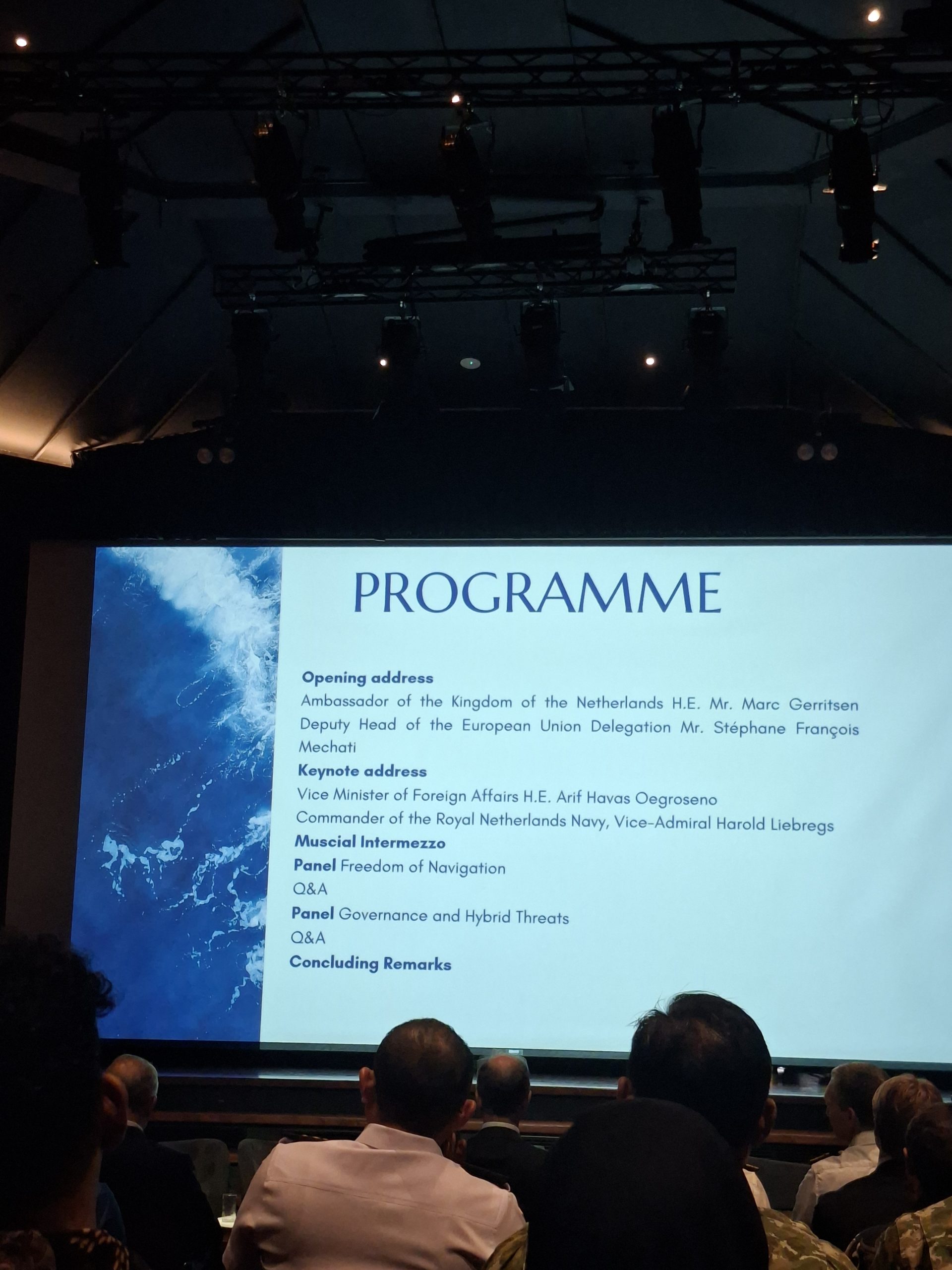
Arie Afriansyah reaffirmed Indonesia’s strong commitment to UNCLOS and its obligations as an archipelagic state, particularly regarding ALKI (Indonesian Archipelagic Sea Lanes). Responding to public narratives suggesting that Indonesia might close ALKI in the event of conflict in areas such as the Taiwan Strait, he clarified that Indonesia remains committed to maintaining international navigation routes and would not close ALKI.
Indonesia’s “bebas aktif” (free and active) foreign policy was described as a policy of neutrality that simultaneously protects Indonesia’s sovereignty while ensuring compliance with international obligations under UNCLOS. The main challenge identified was Indonesia’s capacity to monitor and detect whether foreign military passage through Indonesian waters constitutes innocent passage or potentially belligerent activity.
The discussion also addressed emerging technological developments, including underwater drones and Unmanned Underwater Vehicles (UUVs). UNCLOS was considered insufficiently equipped to address such technologies, particularly regarding military activities within the Exclusive Economic Zone (EEZ). Participants noted that Indonesia currently lacks specific regulations governing UUVs and underwater drones.
European Union Perspective on Maritime Security
Hans Huygens outlined the European Union Maritime Security Strategy, which was updated in 2026. The strategy focuses on several priorities, including strengthening maritime presence, coordination of maritime operations, cooperation with strategic partners, maritime domain awareness, implementation of UNCLOS, capability enhancement, and maritime education and training. Examples of EU maritime operations were discussed, including:
- Operation Atalanta for anti-piracy efforts off Somalia;
- Operation Aspides for protection of navigation in the Red Sea.
The discussion emphasized that freedom of navigation is not merely an abstract legal principle but depends heavily on operational conditions such as maritime security, coordination, enforcement capacity, and situational awareness.
Operational Challenges in Freedom of Navigation
Matthijs Ooms emphasized that freedom of navigation only becomes meaningful when ships can operate safely and confidently. Maritime security therefore depends on systems capable of ensuring safe trade flows, coordination, and effective law enforcement. The discussion also highlighted the concept of “sea blindness,” where maritime actors operate in the same space but fail to recognize interconnected maritime governance challenges. Piracy was referenced as an example of how UNCLOS provides universal jurisdiction mechanisms, but enforcement still depends heavily on operational coordination and prosecution capacity.
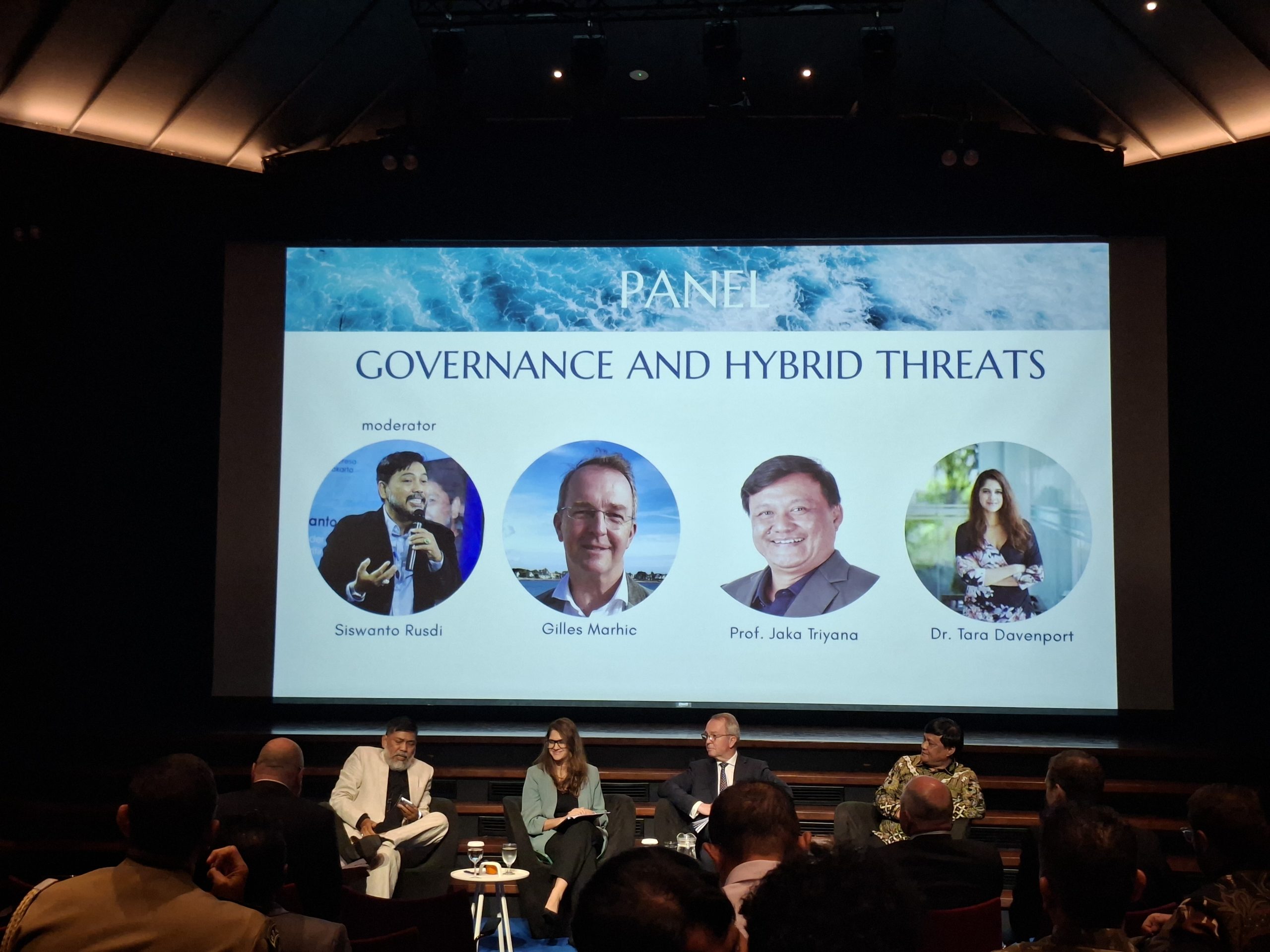
Panel 2: Governance and Hybrid Threats
Protection of Submarine Infrastructure and Submarine Cables
Tara Davenport highlighted the growing importance of submarine data and power cables as critical global infrastructure. Submarine data cables currently carry approximately 95–99% of global internet traffic, while submarine power cables are becoming increasingly important in supporting renewable energy systems and cross-border electricity transmission. As a result, disruptions to submarine cable infrastructure may cause significant economic, communication, and security consequences.
The discussion emphasized that UNCLOS was primarily designed as a peacetime treaty and provides freedoms relating to the laying and repair of submarine cables in the high seas and EEZs. However, UNCLOS does not establish strong enforcement mechanisms for the protection of submarine cables, particularly during situations involving crisis, conflict, or hybrid threats. Although states may adopt domestic regulations, obligations imposed on flag states remain relatively weak, while coastal states possess limited authority to investigate or board vessels suspected of damaging submarine infrastructure in the EEZ.
Participants also discussed the increasing legal and operational complexity surrounding submarine cable protection in the context of emerging hybrid threats. While submarine cables are privately owned infrastructure, they serve essential public functions by supporting communication and energy systems. In practice, legal responses are generally clearer in cases involving negligent damage, where private operators may pursue legal claims against responsible vessels. However, determining responsibility and proving deliberate sabotage or hostile intent remains significantly more difficult, particularly in incidents involving “shadow fleet” vessels or activities occurring below the threshold of armed conflict.
Hybrid Threats and Maritime Governance
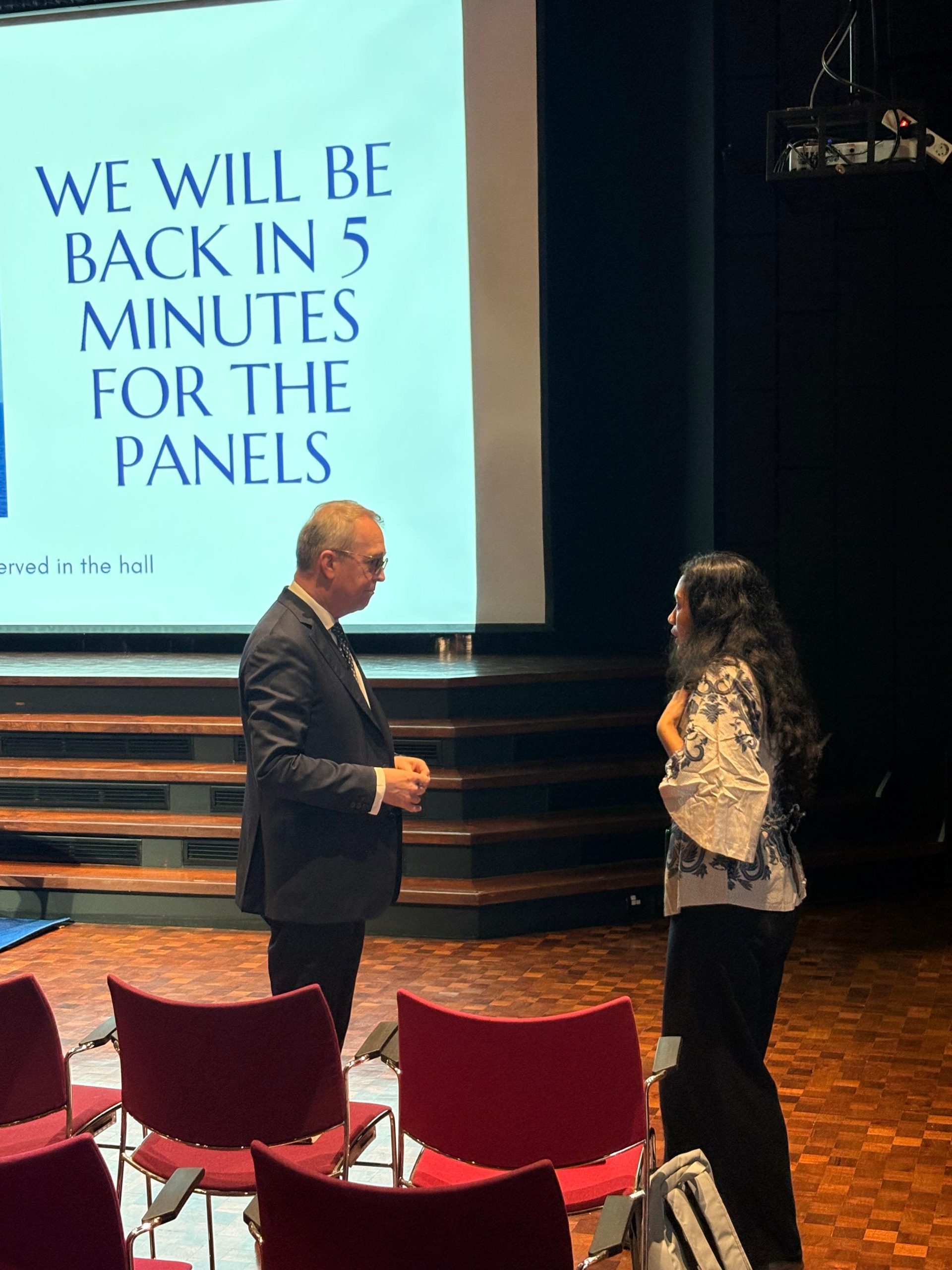
Jaka Triyana discussed hybrid threats as activities occurring within the “gray zone” between peace and armed conflict. These threats often involve both state and non-state actors utilizing advanced maritime technologies such as drones, underwater vehicles, and other emerging sea-based systems.
The discussion highlighted that ocean governance is becoming increasingly complex due to the growing number of actors involved and rapid technological development. Participants emphasized the importance of clarifying institutional authority at sea and strengthening Indonesia’s governance capacity in responding to evolving maritime threats.
Special attention was given to the South China Sea context, where uncertainty over jurisdiction and overlapping interests complicate legal enforcement and maritime governance. Participants noted the importance of improving coordination among Indonesian institutions, including the Navy, Bakamla, Ministry of Energy and Mineral Resources, and other agencies.
Protection of Submarine Infrastructure
A significant portion of the discussion focused on submarine data and power cables, which carry approximately 95–99% of global internet traffic and electricity transmission. Tara Davenport emphasized that submarine cables are critical infrastructure supporting global communication and energy systems. Several incidents in the Baltic Sea between 2022–2025 were discussed, including:
- Nord Stream incident (2022);
- Baltic Connector pipeline incident (2023);
- Damage to Sweden–Lithuania and Germany–Finland submarine cables (2024);
- Eagle S incident (December 2024);
- Vision incident (January 2025).
Many incidents involved vessels suspected of belonging to “shadow fleets” linked to state actors. However, proving deliberate sabotage remains legally and operationally difficult.
Participants noted that UNCLOS allows states to lay and repair submarine cables in the high seas and EEZ, but does not provide strong enforcement mechanisms for cable protection. Flag state obligations remain weak, while coastal states possess limited authority to board or investigate vessels suspected of damaging submarine infrastructure within the EEZ.
The discussion also highlighted that submarine cables are privately owned but serve vital public functions. Although legal remedies exist for negligence-based damage, protection during crises or armed conflict remains legally uncertain.
Output for Legal Lab
The symposium also strengthened the Legal Lab Team’s network and knowledge base in relation to emerging issues under international maritime law, particularly through exchanges with government representatives, academics, foreign diplomats, naval practitioners, and international legal experts. The discussions created opportunities to expand strategic engagement and potential collaboration with knowledge partners working on ocean governance, maritime security, underwater infrastructure protection, and UNCLOS-related developments. These engagements are important in supporting the team’s approach to legal risk prevention, particularly in identifying emerging governance trends, regulatory gaps, and operational risks that may affect maritime, energy, and infrastructure-related sectors.
In the context of Legal Lab’s sectoral focus on ocean, maritime, and climate law, the discussions also provided practical insights relevant to advisory and risk assessment work, including issues concerning maritime security governance, hybrid threats, submarine cable protection, institutional coordination, technological developments at sea, and evolving interpretations of UNCLOS obligations. The symposium therefore contributed not only to substantive legal analysis, but also to strengthening Legal Lab’s ecosystem of institutional and knowledge partnerships that support evidence-based legal advisory, policy engagement, and long-term legal risk mitigation strategies in the maritime sector.
DISCLAIMER
Publication Disclaimer:
This disclaimer applies to the publication of articles by Anggraeni and Partners. By accessing or reading any articles published by Anggraeni and Partners, you acknowledge and agree to the terms of this disclaimer:
- No Legal Advice: The articles published by Anggraeni and Partners are for informational purposes only and do not constitute legal advice. The information provided in the articles is not intended to create an attorney-client relationship between Anggraeni and Partners and the reader. The articles should not be relied upon as a substitute for seeking professional legal advice. For specific legal advice tailored to your individual circumstances, please consult a qualified attorney.
- Accuracy and Completeness: Anggraeni and Partners strives to ensure the accuracy and completeness of the information presented in the articles. However, we do not warrant or guarantee the accuracy, currency, or completeness of the information. Laws and legal interpretations may vary, and the information in the articles may not be applicable to your jurisdiction or specific situation. Therefore, Anggraeni and Partners disclaims any liability for any errors or omissions in the articles.
- No Endorsement: Any references or mentions of third-party organizations, products, services, or websites in the articles are for informational purposes only and do not constitute an endorsement or recommendation by Anggraeni and Partners. We do not assume responsibility for the accuracy, quality, or reliability of any thirdparty information or services mentioned in the articles.
- No Liability: Anggraeni and Partners, its partners, attorneys, employees, or affiliates shall not be liable for any direct, indirect, incidental, consequential, or special damages arising out of or in connection with the use of the articles or reliance on any information contained therein. This includes, but is not limited to, loss of data, loss of profits, or damages resulting from the use or inability to use the articles.
- No Attorney-Client Relationship: Reading or accessing the articles does not establish an attorney-client relationship between Anggraeni and Partners and the reader. The information provided in the articles is general in nature and may not be applicable to your specific legal situation. Any communication with Anggraeni and Partners through the articles or any contact form on the website does not create an attorney-client relationship or establish confidentiality.
- Intellectual Property: This publication is an original work of the author(s) that has not been previously published or submitted for publication elsewhere. All intellectual property rights in relation to this publication, including economic rights, are exclusively owned by Anggraeni and Partners (AP).
- Use of AI Tools: During the preparation of this work, the author(s) may use AI-assisted technologies for readability. After using this tool/service, the author(s) reviewed and edited the content as needed for the purposes of the publication. Any use of artificial intelligence tools, if applied, is limited to supporting purposes only, and the author remains fully responsible for the accuracy, integrity, and quality of the content.
By accessing or reading the articles, you acknowledge that you have read, understood, and agreed to this disclaimer. If you do not agree with any part of this disclaimer, please refrain from accessing or reading the articles published by Anggraeni and Partners.
Related events

Anggraeni & Partners Shares Insights at Atma Jaya Business Law Competition (ABLC) 2026
SCMA Launches New Website, Strengthening Access to Maritime Arbitration Resources

Anggraeni and Partners Supports Universitas Indonesia Team at International Maritime Law Arbitration Moot (IMLAM) 2026