Loading...
Back
Blue Injustice in Indonesian Islands: Do Coastal Communities Have Fair Access to Blue Carbon Benefits?
June 2, 2026
Published in: IOP Conference Series: Earth and Environmental Science, Vol. 1618 (2026), Article 012028
DOI: 10.1088/1755-1315/1618/1/012028
Conference: 5th International Conference on Marine and Maritime Biodiversity and Technology (ICMMBT-2025) Access: Open Access — Creative Commons Attribution 4.0
Authors: Tiyana Sigi Pertiwi · Orima M. Davey · Alicia D. Anugerah · Setyawati Fitrianggraeni Anggraeni & Partners, Jakarta, Indonesia
Abstract.
Blue carbon has become a strategic priority within Indonesia’s climate and blue economy agenda due to its extensive coastal ecosystems and growing
integration into carbon markets. This article examines whether Indonesia’s blue carbon governance framework provides coastal communities with fair and equitable access to benefits, in line with international standards on justice and benefit sharing. This research employs a normative legal research method using a Swiss cheese analytical approach to identify overlapping gaps across domestic environmental, coastal, and investment laws, assessed against international fairness standards, particularly the Nagoya Protocol and the Fair and Equitable Treatment principle. The findings demonstrate that blue carbon is increasingly mobilized through market-based mechanisms without adequate legal safeguards
for community participation, consent, and benefit sharing. Although Indonesia’s legal framework formally recognizes community rights, implementation remains largely procedural, enabling value capture by state and private actors while environmental and livelihood risks are borne by coastal communities.Furthermore, international fairness standards are weakly operationalized in blue carbon governance, despite formal ratification. This reveals a substantive justice gap in Indonesia’s blue carbon regime, where fairness functions as a formal commitment rather than an enforceable protection, resulting in persistent risks of blue injustice
Why should Indonesia be more concerned with their blue carbon policies?
Indonesia should be concerned about blue carbon because it possesses some of the world’s largest and most diverse carbon-rich coastal ecosystems, including mangroves, seagrasses and salt marshes, which are considered vital for climate change mitigation, biodiversity conservation and
coastal protection. Such ecosystems store vast amounts of carbon, far more efficiently than many terrestrial forests, while also supporting fisheries, tourism and the livelihoods of millions of coastal residents. However, rapid coastal development, deforestation of mangroves and marine
pollution threaten to release this stored carbon and undermine ecosystem services. This ecological vulnerability elevates blue carbon from a conservation issue to a governance concern, as regulatory choices directly determine who bears the costs of protection and who benefits from
carbon related economic activities. Protecting and restoring blue carbon habitats not only helps Indonesia meet its climate commitments under international agreements but also strengthens food security, safeguards coastal communities from erosion and storm surges, and opens
opportunities for sustainable economic growth through mechanisms like carbon credit markets. Without clear legal safeguards, these economic opportunities risk reinforcing unequal benefit distribution rather than promoting climate justice for coastal communities.
Research Method
The study applies a normative legal research method based on documentary analysis of primary and secondary legal sources, including:
- Indonesia Blue Economy Roadmap 2023–2045
- National Medium Term Development Plan 2025–2029
- Law No. 32 of 2014 on the Sea
- Law No. 27 of 2007 on the Management of Coastal Areas and Small Islands
- Presidential Regulation No. 98 of 2021 on Carbon Economic Value
- The Nagoya Protocol and relevant ILO standards
The analysis uses the Swiss Cheese Model as a conceptual framework to show that Indonesia’s governance failures are not caused by a single regulatory flaw, but by overlapping gaps across multiple layers — fragmented sectoral regulations, weak implementing mechanisms, insufficient international standard integration, and limited legal recognition of community rights. When these gaps align, blue carbon initiatives can meet formal climate and economic objectives while failing entirely on social equity.
What the Research Recommends
The paper argues that correcting blue injustice requires treating fairness as a legal condition of blue carbon governance — not an aspirational add-on.
Three minimum requirements should be embedded into blue carbon project approval and carbon credit registration processes:
- Verifiable prior informed consent from affected coastal communities before any project proceeds
- Enforceable benefit-sharing arrangements with a defined and transparent portion of carbon market returns allocated to communities
- Meaningful community involvement in ongoing project governance — not just one-off consultations
These requirements should be operationalized through integrity-based compliance instruments or certification schemes, ensuring that blue carbon initiatives advance both climate effectiveness and social justice simultaneously.
Why This Research Matters
Blue carbon governance sits at the intersection of several fast-moving legal and policy domains: climate law, investment law, maritime law, biodiversity law, and indigenous rights. Indonesia, as one of the world’s most carbon-rich coastal nations, is a test case for whether the global blue economy can deliver on its promise of sustainable and equitable development — or whether it will reproduce familiar patterns of exclusion under a sustainability label.
This paper is one of the first to apply the Swiss Cheese analytical framework to blue carbon governance in Indonesia, and among the few to systematically map the Nagoya Protocol’s fairness provisions against Indonesia’s actual blue carbon regulatory practice. It contributes to a growing body of legal scholarship calling for community-centered approaches to climate finance and carbon market governance in the Global South.
About the Authors
Tiyana Sigi Pertiwi is a legal researcher and associate at Anggraeni & Partners, Jakarta, with a focus on maritime law, environmental governance, and blue economy policy.
Orima M. Davey is a legal researcher at Anggraeni & Partners
Alicia D. Anugerah is a legal researcher at Anggraeni & Partners focusing on maritime and environmental law.
Setyawati Fitrianggraeni is the Managing Partner of Anggraeni & Partners.
Anggraeni & Partners is a Jakarta-based boutique holistic dispute resolution law firm specializing in maritime, energy, infrastructure, and dispute resolution. The firm regularly publishes legal research and commentary on regulatory developments affecting Indonesia’s blue economy, coastal governance, and climate policy.
Learn more about Anggraeni & Partners
Full article can be accessed here :
Pertiwi T S, Davey O M, Anugerah A D and Fitrianggraeni S 2026 Blue injustice in Indonesian islands: Do coastal communities have fair access to blue carbon benefits? IOP Conf. Ser.: Earth Environ. Sci. 1618 012028. https://doi.org/10.1088/1755-1315/1618/1/012028
Related events

Anggraeni & Partners Shares Insights at Atma Jaya Business Law Competition (ABLC) 2026
SCMA Launches New Website, Strengthening Access to Maritime Arbitration Resources
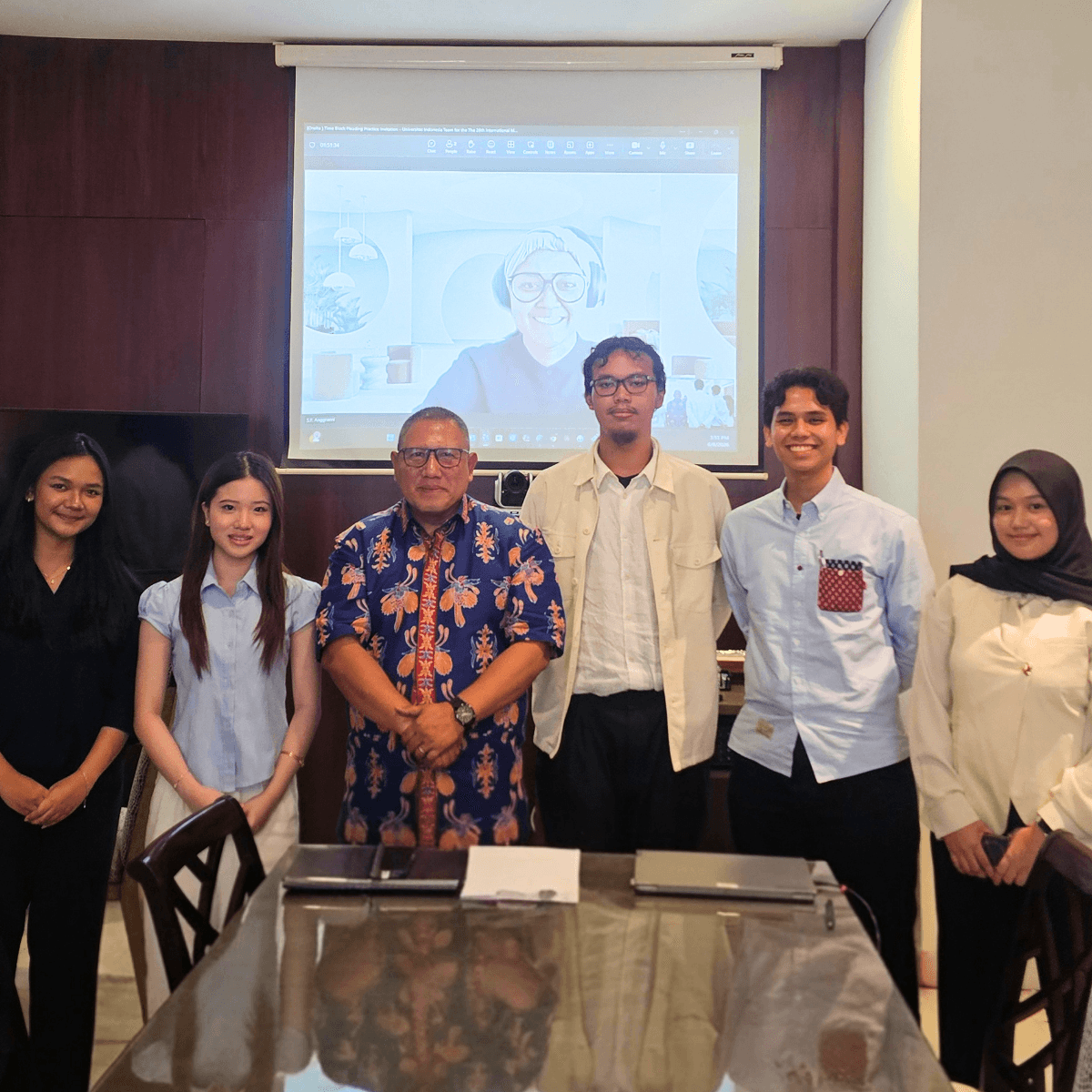
Anggraeni and Partners Supports Universitas Indonesia Team at International Maritime Law Arbitration Moot (IMLAM) 2026